
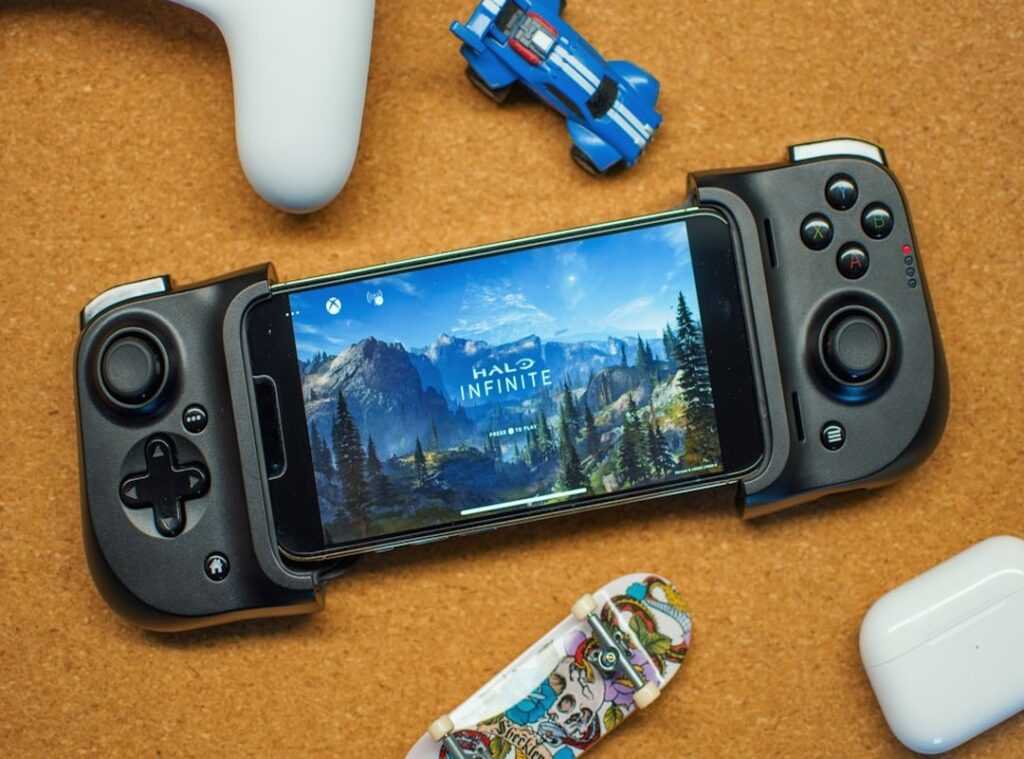
Ever found yourself away from your console, itching to dive into your favorite AAA game? I know I have. The frustration of wanting high-end gaming without high-end hardware is real.
But what if you could access those experiences right on your phone? mobile cloud gaming platforms come in. This article promises to be your go-to guide, slicing through the hype to find the perfect fit for you. We’ve spent hours testing these platforms on different phones and networks.
Why trust us? Because we’ve done the legwork, exposing what truly works. Imagine gaming on the go, no clunky gear needed.
Ready to transform your mobile gaming experience? Stick around. This guide is all you need to open up the console power on your smartphone.
Cloud Gaming: Your PC in Your Pocket?
Ever think of cloud gaming as Netflix for video games? That’s not far off. Picture this: a beefy computer sits in a data center somewhere, running your game.
It streams the video feed straight to your phone in real-time. Sounds like magic, right? But it’s not sorcery (it’s) technology.
Your taps or controller inputs bounce back to the server almost instantly.
So what makes mobile cloud gaming platforms stand out? It’s the convenience. You don’t need a high-end PC, just a decent internet connection.
However, gaming on a mobile device has its quirks. On-screen touch controls can be clunky (I mean, who likes smudges on their screen?). A dedicated mobile controller changes the game entirely.
Pro tip: always opt for a controller if you’re serious about those high scores.
And here’s something you might not know. The growth of esports billion dollar industry plays into this trend. With more people gaming on-the-go, mobile cloud gaming isn’t just a pastime.
It’s a movement.
Cloud gaming fits a PC in your pocket, no strings attached. That’s a major win for gamers everywhere.
The Titans of Mobile Cloud Gaming: Showdown Time
Mobile cloud gaming platforms are shaking up the gaming world. But which one deserves your attention? to a straight-to-the-point comparison of the big players: Xbox Cloud Gaming, NVIDIA GeForce NOW, and PlayStation Plus Premium. You’re looking for performance, a game library, and value, right?
Let’s see who nails it.
Xbox Cloud Gaming really leans into accessibility. Its Game Pass Ultimate offers a massive collection. You don’t just get a curated list; it’s practically a buffet of games.
Exclusive titles? Halo, Gears of War, Forza. They’re right at your fingertips.
You probably know this already, but the library size can make a massive difference when you’re indecisive (and who isn’t?).
Now, performance. Xbox Cloud Gaming supports up to 1080p at 60fps on mobile. It’s solid, not mind-blowing.
You won’t get the full 4K experience here, but for mobile, it’s smooth enough. Do you really need 4K on your phone? That’s a genuine question.
The consistency is mainly good unless your Wi-Fi decides to take a coffee break.
What about cost? The Game Pass Ultimate is $16.99 a month. Pricey?
Maybe, but considering it’s bundled with Xbox Live Gold and PC Game Pass, you get a lot of bang for your buck. It’s a complete space, which can be compelling for someone wanting an all-in-one deal.
The app. Xbox Cloud Gaming’s mobile experience is fairly intuitive. It supports touch controls and has a decent layout.
It’s not perfect, but functional. You won’t throw your phone across the room in frustration (hopefully).
Let’s talk GeForce NOW. It’s different here. You need to own the games.
No curated list (you’re) playing what you already have. Exclusive titles aren’t part of the package. So, this is more for folks who have invested in their library or use platforms like Steam.
Performance? Stellar. It’s its strong suit, shining with support for up to 4K and 120fps on compatible devices.
Definitely a treat if you need that visual clarity. But is it consistent? Mostly, as long as your internet can handle it.
High-speed is a must here.
Cost is flexible. There’s a free tier with limitations. Then, you’ve got Priority at $9.99 and RTX 3080 tier at $19.99 for premium services.
A little “choose your own adventure” pricing, and that’s appealing.
The app experience is strong but slightly more complex. If you’re tech-savvy, it’s a breeze. Newbies might need some time.
Touch support is here but not always smooth.
PlayStation Plus Premium enters the ring differently. Game library? It’s got a rotating selection.
With classics and newer titles, it’s not as massive as Game Pass, but it has its gems (think) God of War or The Last of Us.
Stream quality is capped at 1080p. Consistent but doesn’t reach the heights of GeForce NOW. It’s serviceable, but if 4K is a must, look elsewhere.
Value-wise, you’re paying for a more console-centric experience. It’s part of the whole PlayStation Plus subscription, starting at $17.99 monthly.
Intuitive? PlayStation’s app has improved, but it’s still hit-or-miss with touch controls. It’s more console-first, mobile-second.
Does that bother you? It might.
So, which one wins this head-to-head? Xbox for an expansive gaming library, GeForce NOW for performance, and PlayStation for exclusives. Still undecided?
Check out the best cloud gaming services for a deeper dive. The choice, as they say, is yours.
Your Mobile Battle Station: Gear and Connection Essentials
Ever tried gaming on a weak connection? It’s a nightmare. For mobile cloud gaming platforms, you need more than a wish and a prayer to make it work smoothly.

Here’s the deal: a stable, low-latency connection is key. Aim for at least 25 Mbps. The 5GHz Wi-Fi band is your best friend here.
It’s faster and less crowded than the old 2.4GHz. But, if you’re on mobile data, 5G is what you should be eyeing. Anything less, and you’re just asking for lag.
Controllers. Let’s talk about them. A dedicated mobile controller like the Razer Kishi or Backbone One takes the cake.
They’re portable, integrated, and scream convenience. You won’t want to go back to a clunky console controller attached with a phone clip. (Unless you’re into that sort of challenge.) The smooth integration of mobile-first controllers makes your gaming sessions feel uninterrupted and natural.
Now, about data usage. Cloud gaming isn’t light on the bytes. It can gobble up 7-10 GB per hour.
That’s no joke. Relying solely on mobile data? You might burn through your plan before you know it.
That’s why I always say Wi-Fi is the smarter choice. It’s a hidden cost that’s easy to overlook until it’s too late.
As a gamer, I know the thrill of experiencing new tech. VR is one of those areas to watch. Check out these vr advancements revolutionizing gameplay if you’re curious.
It’s fascinating how technology is redefining gaming experiences.
The Verdict: Is the Cloud Gaming Dream a Reality for You?
Cloud gaming is like the Netflix of video games. It’s got massive libraries and no downloads, which is great if you’re impatient (like me). You can play anywhere with good internet.
But here’s the catch: it all hinges on your connection. Bad internet? You’ll experience lag or visual glitches.
It’s like watching a scratched DVD; frustrating, right?
Plus, those subscription costs add up. It’s not for everyone. If you love playing on mobile cloud gaming platforms but hate buying new consoles, this might be your jam.
But if you’re stuck with shaky Wi-Fi, maybe stick to native mobile games. They’re reliable and lag-free. So, are you dreaming of gaming freedom or just more headaches?
Game Anywhere, Anytime
Being glued to a TV or desk for high-quality gaming is history. With mobile cloud gaming platforms, you’re free. Your phone.
Paired with a solid internet connection. Transforms into a gaming powerhouse. You’ve got the knowledge now.
You know what to do next, right?
Browse the services I mentioned. Check your internet speed. Dive into your next adventure, no console needed.
The freedom to game anywhere is yours. Isn’t it time you took the leap? You’re ready.
Get started now and experience gaming like never before. The world of mobile gaming awaits. Explore it today.
 Timothy Speronzo played a pivotal role in the technical architecture of The Hake Gamer, ensuring the platform could support its complex range of modding resources and community features. His contributions to the project's foundation allowed for a seamless integration of high-performance data and user-focused tools. By bridging the gap between sophisticated backend design and the needs of a growing gaming community, Speronzo helped turn the initial concept into a robust, functional reality.