

Gaming is evolving faster than ever, and if you’re here, you’re probably looking for clear, practical insights you can actually use—whether that’s mastering new strategies, upgrading your setup, or understanding the latest hot topics shaping the community. This article is built to match that intent directly, cutting through the noise to deliver actionable tips, sharp analysis, and real-world examples that improve your in-game performance and overall experience.
We draw from hands-on gameplay testing, deep dives into current meta shifts, and active engagement within competitive and modding communities to ensure everything shared here is accurate, relevant, and up to date. From smart optimization tweaks to leveraging cross-platform gaming benefits for broader matchmaking and smoother play with friends, you’ll get insights designed to give you a genuine edge.
Whether you’re a casual player looking to level up or a dedicated gamer refining your craft, this guide will help you play smarter, not just harder.
Beyond the Console Wars: Unlocking the Full Gaming Universe
For years, gamers have argued PlayStation vs. Xbox vs. PC vs. Nintendo. That brand loyalty feels tribal (like choosing a Hogwarts house). But sticking to one system means missing exclusives, fresh mechanics, and vibrant communities. When you embrace multiple platforms, you unlock real advantages:
- Play cinematic blockbusters,
- Xbox Game Pass value,
- PC mods and performance freedom,
- Nintendo creativity and couch co-op magic.
These cross-platform gaming benefits expand your skills, social circles, and library depth. Instead of fighting console wars, start winning experiences. Level up everywhere today.
The Unlocked Library: Why Exclusive Games Still Matter
Platform-exclusive titles—games designed to launch on a single system—act as system-sellers, meaning they drive hardware purchases. This isn’t marketing myth; it’s measurable. Sony reported that “God of War Ragnarök” sold over 5 million copies in its first week (Sony Interactive Entertainment, 2022), contributing to a spike in PS5 console demand. Similarly, “Halo 3” generated $300 million in its first week back in 2007 (Microsoft data), cementing Xbox as a multiplayer powerhouse.
Consider how each platform builds identity through exclusives:
- PlayStation: “God of War” and “Spider-Man” showcase cinematic storytelling and DualSense haptic immersion.
- Xbox: “Halo” and “Forza Motorsport” emphasize competitive ecosystems and technical performance benchmarks.
- Nintendo: “The Legend of Zelda” and “Super Mario” consistently redefine exploration and platforming design.
- PC: Expansive strategy libraries like “Civilization” and early access indie hits such as “Baldur’s Gate 3” highlight experimentation and modding depth.
Some argue exclusives divide players and limit access. That’s fair. Yet without them, platforms lose creative differentiation. Hardware-specific innovation thrives because of exclusivity. The PS5’s DualSense adaptive triggers in “Returnal” physically simulate weapon resistance. Nintendo’s Switch motion controls reshaped interaction in “Breath of the Wild.” These mechanics rarely emerge from purely multi-platform development.
Data supports their cultural weight: Nintendo’s first-party titles routinely attach to over 20% of its console base (Nintendo earnings reports). That’s extraordinary engagement.
Experiencing exclusives offers a fuller view of gaming’s creative spectrum—beyond shared releases and cross-platform gaming benefits. It’s like watching only blockbuster films and skipping indie cinema (you’d miss the weird, wonderful breakthroughs).
Exclusives don’t fragment gaming. They fuel its evolution.
Connecting Across Ecosystems: Finding Your Ideal Community
When you jump between PlayStation Network, Xbox Live, Nintendo Online, and PC (Steam/Discord), you’re not just switching hardware—you’re stepping into entirely different social ecosystems (yes, vibes matter).
First, Xbox Live feels like the ultimate multiplayer arena. With Game Pass—a subscription library granting on-demand access to hundreds of titles—it naturally fuels party chats and squad-based play. In my experience, Xbox players organize fast, jump into co-op quicker, and treat multiplayer like a weekly ritual. Some argue PlayStation matches this energy, but Xbox’s interface makes group discovery smoother.
Meanwhile, PlayStation Network thrives on trophy hunting—digital achievement badges that turn single-player progress into social currency. I’ve seen entire communities dissect ultra-rare trophies like they’re hidden Marvel post-credit scenes. It’s competitive, but in a strangely collaborative way.
Nintendo Online, by contrast, leans family-friendly. Its cleaner communication tools and iconic franchises create a safer, nostalgia-driven space. Critics say it lacks robust voice features—and that’s fair—but that restraint shapes its welcoming tone.
Then there’s PC. Steam and Discord power unmatched modding—player-created game modifications—and indie experimentation. It’s chaotic, brilliant, and endlessly customizable (sometimes gloriously unstable).
Cross-play has unified friends across devices, highlighting cross-platform gaming benefits, yet it also spotlights each platform’s distinct UI and culture. Platform events, seasonal showcases, and community spotlights further reinforce these identities—different stages, different crowds, same love of play.
From Couch Co-op to Competitive Rig: Customizing Your Playstyle
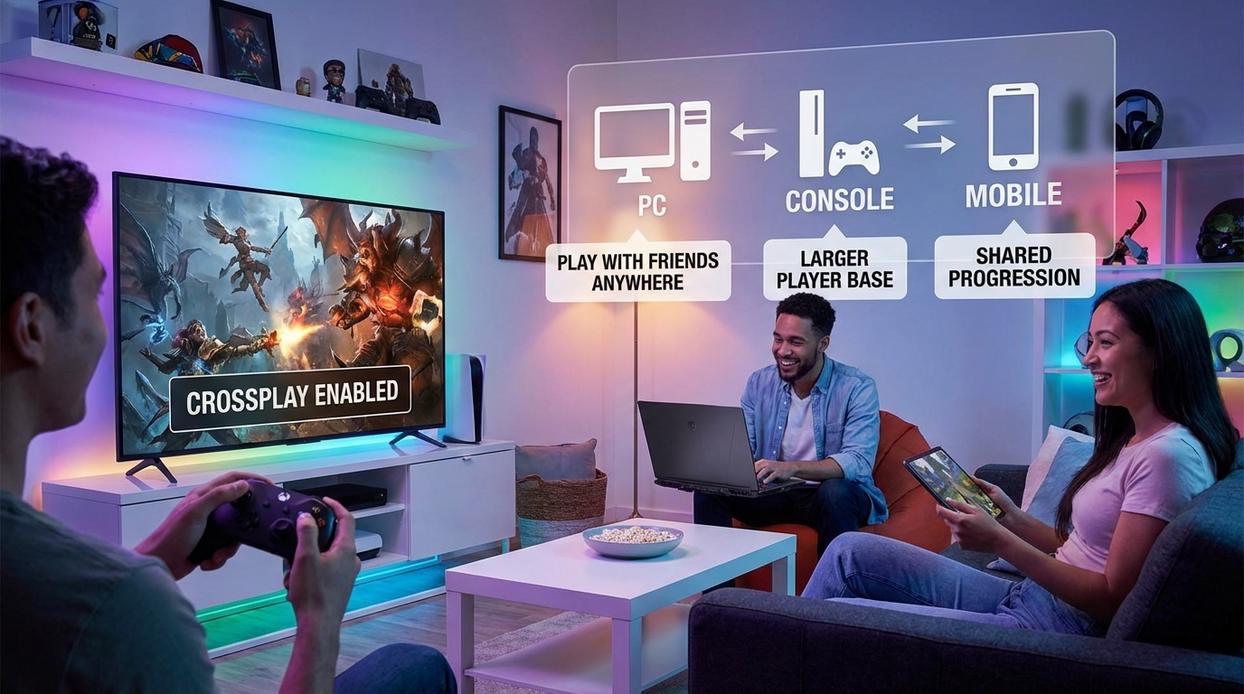
Your setup shapes how you play. Consoles offer a plug-and-play experience—meaning minimal setup, standardized hardware, and fewer technical headaches. You unbox it, connect it, and you’re in. That simplicity is perfect for couch co-op nights (pizza grease optional).
PC, on the other hand, thrives on customization. You can upgrade GPUs, tweak graphics settings, and install performance mods. Want higher frame rates in a fast-paced shooter? Lower shadow quality, enable DLSS or FSR, and fine-tune mouse sensitivity. That flexibility can translate into measurable performance gains (NVIDIA notes higher FPS reduces input lag).
Controller choice matters too:
- DualSense: Adaptive triggers and haptic feedback increase immersion.
- Xbox controller: Widely praised ergonomic layout for long sessions.
- Joy-Cons: Modular design enables split multiplayer anywhere.
For competitive genres like FPS or RTS, mouse and keyboard provide objective precision advantages—faster aiming and more keybind options (esports data consistently shows PC dominance in these genres).
Prefer portability? The Switch and Steam Deck let you shift playstyles entirely—dock at home, handheld on the go.
Pro tip: Test sensitivity settings in training modes before ranked matches.
And with cross-platform gaming benefits, your customized setup doesn’t have to isolate you from friends.
For more on industry shifts, see the rise of live service games benefits and challenges.
Smart Spending: How to Maximize Your Gaming Budget
Smart spending in gaming isn’t about buying less; it’s about buying strategically. Each platform has a distinct business model, and understanding those differences is your edge.
- Xbox Game Pass offers an “all-you-can-eat” library—meaning a rotating catalog of downloadable titles for a flat monthly fee—with day-one releases on major exclusives. Instead of paying $70 upfront, you gain instant access (a Netflix-style approach that competitors rarely match at launch).
- PC gaming thrives on aggressive digital discounts. Steam’s Summer Sale, for example, routinely slashes prices by 50–90%, and many multiplayer titles are free-to-play. Plus, there’s no mandatory online subscription fee.
- Platform-agnostic players leverage cross-platform gaming benefits by purchasing wherever prices drop lowest or subscribing only when a must-play title appears.
Some argue loyalty earns better ecosystem rewards. However, flexibility often saves more long term. Pro tip: wishlist games and track price history before buying.
Becoming a Well-Rounded and Informed Gamer
Owning every console sounds impressive, but being open matters more. Console A vs. Console B isn’t about loyalty; it’s about strengths. One offers exclusives and haptic immersion, another delivers portability and indie depth. PC brings mod freedom and performance tweaks, while consoles simplify plug-and-play (sometimes that’s priceless).
The real win? A vastly larger game library, diverse player communities, tailored gameplay experiences, and greater financial value through sales and bundles. These cross-platform gaming benefits solve the fear of missing out.
Try a friend’s system, sample a new subscription, or wishlist one title elsewhere—expand your playbook.
Level Up Your Gaming Experience Today
You came here to get sharper strategies, smarter setup tips, and real insight into what’s happening in the gaming world—and now you have it. From mastering advanced mechanics to exploring cross-platform gaming benefits, you’re better equipped to compete, connect, and customize your experience.
But let’s be honest—the frustration of laggy setups, inconsistent performance, or falling behind the meta can kill your momentum fast. Staying competitive means staying informed, optimizing your gear, and learning from a community that’s always pushing forward.
Now it’s your move.
Dive deeper into new strategies, experiment with pro-level setup tweaks, and explore fresh mods that elevate your gameplay. Join thousands of dedicated gamers who rely on us for cutting-edge tips and community-driven insights. Don’t just play—dominate.
Jump in now and start upgrading your game today.
 Nicholas Bensonsolas was instrumental in shaping the community-centric pillars of the project, focusing on the strategies and spotlights that define the site today. His work in developing the framework for tactical training and pro setup tips provided the essential "player-first" perspective required for the platform to thrive. Through his collaborative efforts during the building phase, Bensonsolas helped establish a voice that resonates with both competitive professionals and technical enthusiasts alike.