
Gaming is evolving faster than ever, and staying ahead means understanding the trends, tools, and strategies shaping today’s biggest titles. Whether you’re here for the latest hot topics, smarter gameplay strategies, modding insights, or pro-level setup tips, this article delivers exactly what you’re looking for—clear, actionable information that helps you level up your experience.
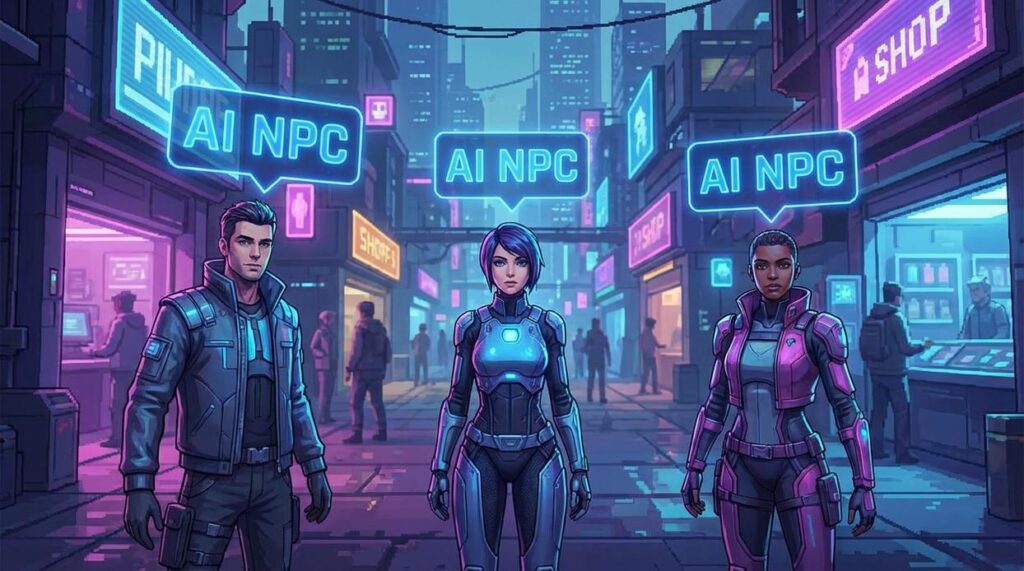
One of the biggest forces driving change right now is AI in video game development, transforming everything from smarter NPC behavior to dynamic world-building and personalized gameplay. But hype alone isn’t enough. We break down what’s actually happening, what it means for players, and how you can use these advancements to your advantage.
Our insights are built on deep industry analysis, hands-on testing, and close observation of gaming communities and emerging tech. You’ll get practical takeaways, not fluff—so you can play smarter, build better, and stay ahead of the curve.
Beyond Smarter Enemies: How AI is Redefining Game Creation
I remember installing a mod that dynamically rebuilt quest lines after I skipped a major boss. The world reacted like it was annoyed with me (fair). That was my first glimpse of AI in video game development reshaping more than enemy pathfinding.
Today, AI systems help:
- Generate living open worlds that evolve with player choice
- Automate animation blending for smoother combat
- Build adaptive soundtracks that shift with tension
Some argue it dilutes creativity. I disagree. Used well, it amplifies designers’ ideas—like giving developers a co‑pilot instead of autopilot.
Building Infinite Worlds: AI-Powered Procedural Generation
Procedural Content Generation (PCG) refers to using algorithms—rule-based systems that automatically create content—to build game environments. Think early space exploration titles: massive galaxies, yes, but after a few planets you started seeing the same rock with a different color filter (we noticed).
Now compare that with AI-driven PCG.
Traditional PCG vs AI-Driven PCG
Traditional PCG: Fast, scalable, but often repetitive. Designers set parameters, and the system mixes and matches assets. Efficient? Absolutely. Deeply artistic? Not always.
AI-driven PCG: Models trained on specific art styles generate assets that feel intentional. In AI in video game development, machine learning systems analyze patterns—like brush strokes, color palettes, and architectural shapes—and create new content that aligns with a lead artist’s vision. The result is COHESIVE variety instead of chaotic randomness.
Some critics argue handcrafted worlds are superior. And they have a point. Human designers embed subtle storytelling that algorithms can miss. But AI doesn’t replace artists—it amplifies them. Imagine generating thousands of unique trees that all match your fantasy kingdom’s aesthetic in minutes, not months.
For players, that means BIGGER worlds, smarter quests, and near-infinite replayability—without sacrificing visual identity. It’s less copy-paste universe, more living, breathing multiverse.
From Scripts to Souls: Crafting Dynamic NPCs with AI
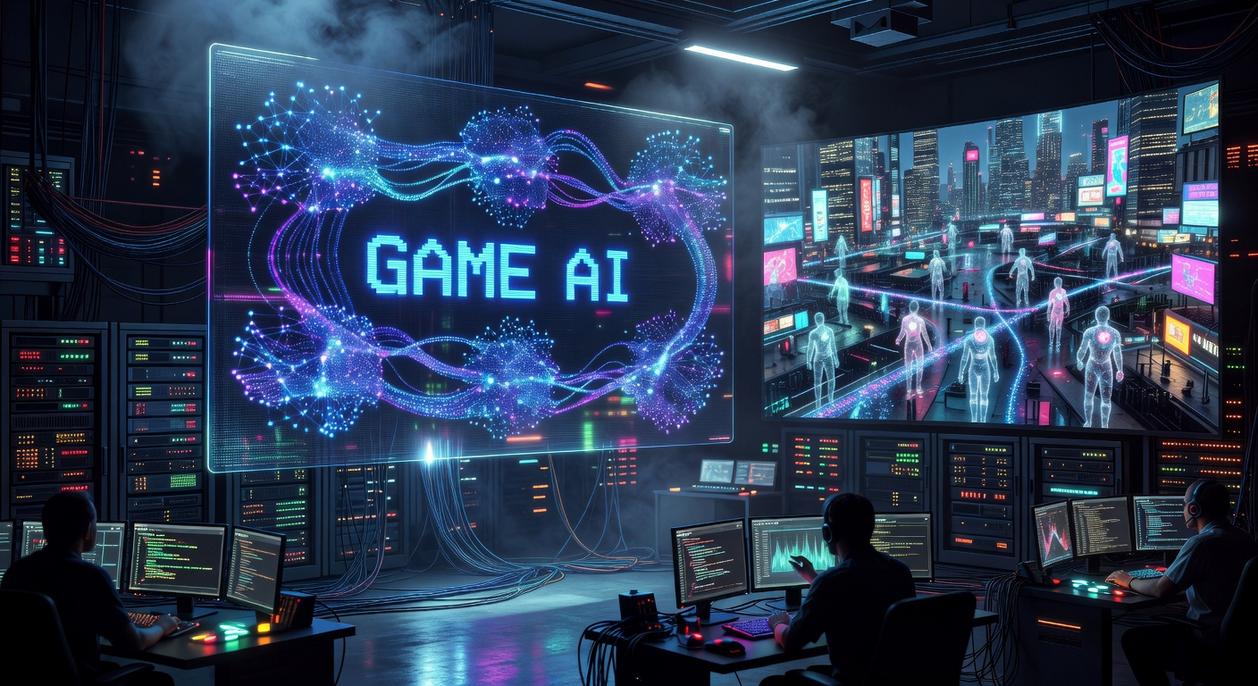
For decades, NPCs (Non-Player Characters, or computer-controlled figures in a game world) followed rigid scripts. They looped the same dialogue, walked the same paths, and reacted like theme park animatronics—impressive at first, predictable by hour two. Today, advanced behavioral systems and Large Language Models (LLMs, AI models trained on massive text datasets to generate human-like responses) are changing that.
Modern AI in video game development allows NPCs to remember past player actions, pursue personal goals, and adapt dialogue in real time. Instead of selecting from a dialogue tree, players trigger context-aware responses shaped by memory and world state. The result? Emergent narrative—unscripted storylines that evolve naturally from player choice (think less “press X to continue,” more Westworld-lite).
Some critics argue this risks losing tight narrative control. Handcrafted stories, they say, deliver stronger emotional beats. That’s fair. But dynamic systems don’t replace authored storytelling—they enhance it. When an NPC recalls that you betrayed their faction ten hours earlier, the emotional payoff feels earned, not staged.
Recommendations for players and builders:
- Upgrade to a modern multi-core CPU and high-speed SSD to handle complex simulations smoothly.
- Prioritize GPUs with strong AI acceleration support.
- Tweak background processes to free memory for large-scale behavioral models.
These demands are part of the top gaming trends shaping the industry in 2026 (https://thehakegamer.net/top-gaming-trends-shaping-the-industry-in-2026/).
If you want worlds that feel alive, invest in hardware and games built for dynamic systems. Static scripts had their era. Living worlds are next.
Clunky, pre-baked animations are fading fast. In their place, procedural animation—systems that generate movement in real time using physics and player input—creates characters who adjust naturally to uneven terrain, stumble when struck, and grab objects without canned scripts (finally, no more robotic knees). This shift is redefining Use AI in video game development across studios of every size.
Beyond animation, generative tools accelerate asset pipelines. AI-assisted texture synthesis (software that creates surface detail from prompts) can draft stone, fabric, or sci-fi metals in seconds. 3D model generators block out prototypes for weapons or creatures, giving artists a strong starting mesh instead of a blank screen. Even concept art can be iterated rapidly, letting teams test visual directions before committing budget. Some critics argue this dilutes artistic integrity. Fair point. But when humans handle refinement and final polish, quality often improves rather than declines.
To stay competitive, developers should:
- Adopt AI tools early and test them on side projects.
- Set clear style guides so outputs stay consistent.
- Invite modders to experiment with public builds for feedback.
Pro tip: treat AI drafts as clay, not marble. Shape them. When used thoughtfully, these systems expand creativity instead of replacing it. For modern teams.
A Game Just for You: AI-Driven Player Personalization
Gone are the days when “Easy, Normal, Hard” decided your fate before the first cutscene. Today, AI in video game development acts like a behind-the-screen Dungeon Master, quietly adjusting the experience in real time. This system—Dynamic Difficulty Adjustment (DDA)—tracks how you aim, explore, and even how often you retry a boss fight.
If you’re grinding ranked matches in competitive shooters or roaming massive open worlds, the AI can tweak:
- Enemy aggression and accuracy
- Loot rarity based on your build
- Puzzle hints when your inputs slow down
Some purists argue this “invisible hand” cheapens victory. They want fixed difficulty, no training wheels. Fair point. But adaptive systems don’t remove challenge—they calibrate it. Think less rubber-banding, more smart tuning (like adjusting DPI mid-match for peak performance).
In narrative-heavy RPGs, personalization goes deeper. Favor stealth over brute force? Expect side quests and gear that reward subtlety. It’s your playstyle, amplified—not replaced.
The future of play isn’t coming—it’s compiling in real time. Today, AI in video game development powers procedural terrain systems that generate near-infinite maps, adaptive enemy behaviors that learn from player tactics, and dynamic dialogue engines that craft context-aware conversations. In practical terms, that means fewer repeated quests and more personalized story arcs (goodbye, predictable fetch missions). Moreover, machine learning tools accelerate asset creation, cutting production timelines while boosting visual fidelity. Some argue this risks soulless automation; however, developers use these systems as creative partners, not replacements. Think less Skynet, more Jarvis—augmenting imagination, not overriding it. The controller feels alive.
Level Up Your Gaming Edge
You came here to get sharper at gaming—whether that means mastering new strategies, understanding the latest trends, or exploring the impact of AI in video game development on the titles you love. Now you’ve got the insights to play smarter, adapt faster, and stay ahead of the curve.
The real frustration isn’t losing a match—it’s feeling stuck, outplayed, or out of the loop while others level up. With the right strategies, community insights, and pro setup tweaks, you don’t have to stay there.
Now it’s your move: put these tips into action, experiment with new tactics, and optimize your setup for peak performance. If you’re serious about dominating your lobbies and staying ahead of every update, dive into more expert guides and community breakdowns today. Join thousands of competitive players who are already sharpening their edge—start upgrading your game right now.
 Neylith Windmere is the founder of The Hake Gamer, a specialized platform dedicated to the intersection of competitive excellence and technical creativity. By blending professional setup strategies with deep dives into hake-focused modding, Windmere has built a unique community hub that empowers players to master both their gameplay and their hardware. From tactical training to innovation spotlights, their leadership continues to shape the site into an essential resource for the modern, tech-savvy gamer.